In this section
Alumni Stories
Stories that capture the spirit, values, and lived experiences of our alumni.
Memories That Endure
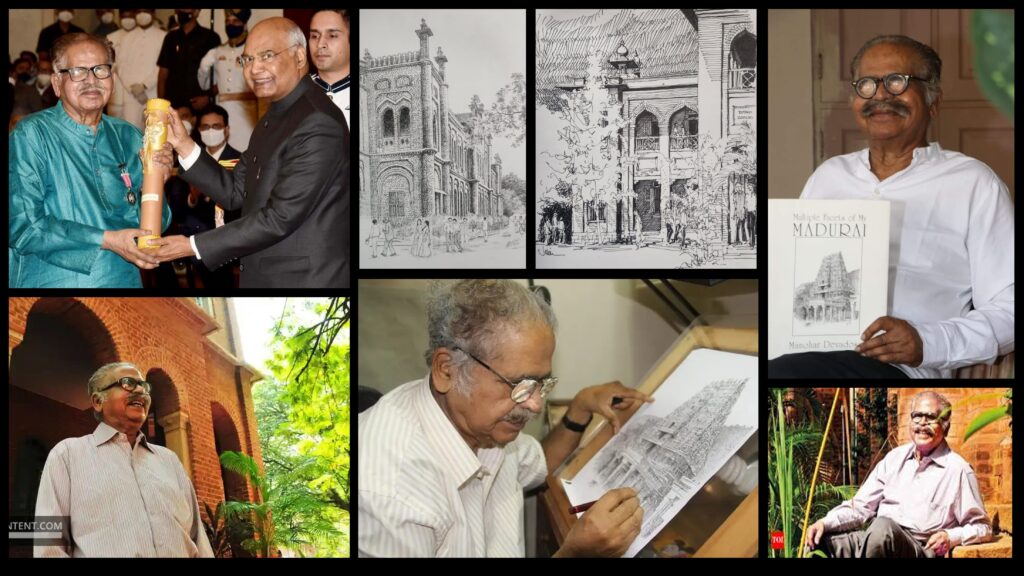
1. Manohar Devadoss (1953–57)
Back in the early 1860s, a certain clipper sped across the oceans from the USA to the port of Madras in southern India, bringing with it ice—a great novelty in those tropical parts at the time. Along with large blocks of slow-melting, highly valued ice, the ship also carried two warm-hearted and highly motivated individuals—Dr. and Mrs. Washburn—who had come to serve the American Madura Mission, established in the 1830s. It was Dr. Washburn who later founded a college at Pasumalai near Madurai, as a natural extension of the school already functioning there.
Around the turn of the century, his successor, Rev. Dr. W. A. Zumbro, moved The American College to its present location at Goripalayam, Madurai. Zumbro transformed forty acres of barren land into an oasis of trees and enlightenment. He and his successors went on to construct numerous brick-and-tile edifices of architectural excellence. Each building possessed a distinctive style, yet all were harmonious—individual parts of a coherent whole. Even the small belfry displays architectural merit. Some of the finest college campus buildings in South India can be seen at The American College, Madurai.
The American educators at the College were sympathetic to the Indian freedom struggle. The management was so conscious of the need for indigenisation that an Indian principal was appointed four years before Independence. During the same period, many academic institutions—including the prestigious Madras Christian College—continued to be headed by white principals for several years even after India became free.
College regulations in those days were rather strict. Smoking was prohibited on campus. Students did not drink. Drugs were unknown. And yet, depending on one’s point of view, the College either enjoyed—or suffered—the reputation of being a liberal institution. Physical restrictions were imposed, but intellectual freedom was encouraged. During my student years, some narrow-minded parents did not want even their sons—let alone their daughters—to join The American College because it was co-educational. Worse still, the management allowed boys to talk to girls. These parents believed that the then all-male Madura College was a safer option.
In those days, most women studying at The American College were Christians, Brahmins, or Malayalees—communities that attached importance to women’s education earlier than many others. When Lady Doak College, the first women’s college in Madurai, opened its doors in the late 1940s, the number of women students at my alma mater dwindled. By the mid-1950s, when I was a student, their numbers had reduced to a mere handful. As a result, most boys hardly had the opportunity to talk to—let alone socialise with—girls.
The most imposing structure on campus is the Main Hall, which houses the administrative offices on the ground floor and a large auditorium on the first floor. Designed by the talented British architect Henry Irving, who also designed the grand Mysore Palace, the building was constructed a century ago. The pen-and-ink drawing of the Main Hall that I completed in November 1995 adorns the opposite page. That said, I must admit that during my college days, many male students were more inclined to ogle shapely women—especially the then college beauty, my classmate Bhavani—than to admire stately edifices such as the Main Hall.
This drawing first appeared in the hardbound edition of my autobiographical novel, Green Well Years. I have since made a minor “improvement” to it by replacing the two anonymous women students with my classmates Bhavani Menon and Jemma T. Sundaram. Capturing facial resemblance in ink is difficult when the face measures barely a centimetre—especially for an artist with a vision problem. I solved this by drawing Bhavani and Jemma larger and bolder, then reducing the image through photocopying. As a result, any contemporary of mine from The American College will easily recognise Bhavani—and, by association, Jemma.
The original artwork remains intact, as Bhavani and Jemma are detachable. Incidentally, I have also included myself in the drawing, standing there, admiring the Main Hall.
2. Legacy and Legends of the College - A Historical Overview
The American College traces its origins to the early years of the twentieth century, growing steadily through the vision, commitment, and dedication of its principals and faculty. The campus evolved through carefully planned expansion, reflecting a balance between academic needs and architectural harmony.
The Main Hall stands as a lasting symbol of this vision. Constructed through sustained effort and financial prudence, it houses the administrative offices on the ground floor and a central auditorium above. Over time, additional structures—including the library, science blocks, hostels, and chapel—were added, each designed to serve both functional and aesthetic purposes.
The College developed in close interaction with the city of Madurai. Roads were realigned, land was acquired through negotiation, and cooperation with the Municipality and Government ensured that growth occurred without disrupting civic life. These developments were guided by foresight and restraint, ensuring long-term benefit for both the institution and the city.
Education at The American College was never confined to classrooms alone. Emphasis was placed on character formation, discipline, and service. Students were encouraged to cultivate intellectual independence, social responsibility, and ethical values.
Growth of Academic Programmes
In 1913, the College was upgraded to First Grade status with the introduction of B.A. degree programmes. Subsequently, new departments were established in Biological Sciences, Physical Sciences, and the Humanities, strengthening the academic foundation of the institution.
Postgraduate courses were introduced gradually, with Zoology and Mathematics among the earliest disciplines to offer advanced study. Over the decades, the curriculum expanded to include Commerce, Economics, Philosophy, Psychology, and the Social Sciences, responding to the changing educational needs of society.
Library facilities grew alongside academic programmes. The Daniel Poor Library emerged as a central academic resource, continually updated to support the teaching and research needs of students and scholars.
Leadership and Administration
Rev. W. W. Wallace (1922–1927)
Rev. W. W. Wallace played a crucial role in strengthening both the physical and academic infrastructure of the College. He emphasised careful planning, financial discipline, and close cooperation with civic authorities.
He was instrumental in improving roads, expanding campus buildings, and strengthening ties with the Government and Municipality. His tenure was marked by steady, purposeful progress rather than dramatic change.
Wallace firmly believed in education as a moral force. His leadership combined administrative efficiency with a deep commitment to Christian values and public service.
Rev. Dr. W. A. Zumbro (1899–1922)
Rev. Dr. W. A. Zumbro was one of the most influential figures in the history of The American College. Born in 1868, he joined the institution after distinguished academic training and missionary work.
Zumbro transformed the campus from barren land into a vibrant academic environment. He planned buildings meticulously, ensuring harmony between architecture and institutional purpose.
His vision extended beyond physical expansion. He worked tirelessly to raise academic standards, recruit capable faculty, and expand facilities. Under his leadership, the College gained recognition as a premier institution in South India.
Zumbro also held deep respect for Indian culture and society. He fostered strong relationships with Indian leaders, churches, and communities, believing firmly that education should contribute to national development.
Rev. Dr. G. T. Washburn (1881–1899)
Rev. Dr. G. T. Washburn laid the foundations of The American College. Educated in the United States, he arrived in India with a strong sense of mission and service.
He established the College at Pasumalai, later overseeing its relocation and expansion. His vision combined academic excellence with moral education.
Washburn strongly believed in practical education. Alongside classical studies, he promoted vocational training, agriculture, and technical skills, ensuring that education remained relevant to Indian realities.
During periods of famine and hardship, Dr. Washburn and his wife provided relief by collecting food and resources for affected communities. Their service extended far beyond the boundaries of the campus.
Educational Philosophy
The American College has consistently upheld the belief that education must address the whole person—intellectual, moral, and social.
Freedom of thought, integrity, discipline, and service formed the core values of the institution. Religious instruction emphasised ethical principles rather than dogma, encouraging students of all faiths to engage thoughtfully and respectfully.
Teachers were expected not only to instruct but also to mentor. Close student–teacher relationships were encouraged, fostering trust, guidance, and personal growth.
The First Two Principals of The American College
(Studies Centre for Indian Literature in English and Translation)
The early principals shaped the character of the institution through their leadership, values, and personal example. Their influence extended beyond administration into the intellectual and moral life of the campus.
Their commitment to discipline, academic rigour, and service laid the foundation for the College’s enduring reputation.
Leaders Who Have Made a Difference
Early Leaders
-
G. T. Washburn (1881–1899)
-
W. A. Zumbro (1899–1922)
-
W. W. Wallace (1922–1927)
-
Peter Isaac (1927–1929)
-
B. S. Softer (1928–1935)
-
Eugene M. Prime (1935–1943)
Later Leaders
-
B. Garrard (1945–1947)
-
D. Peter Jayaraj (1987–1998)
-
D. Samuel Sundaram (1998–2006)
-
K. E. Issac
-
S. J. Savarirayan
-
Manuel A. Thangaraj
-
P. C. Chellappa